Subtotal $0.00

Email :57
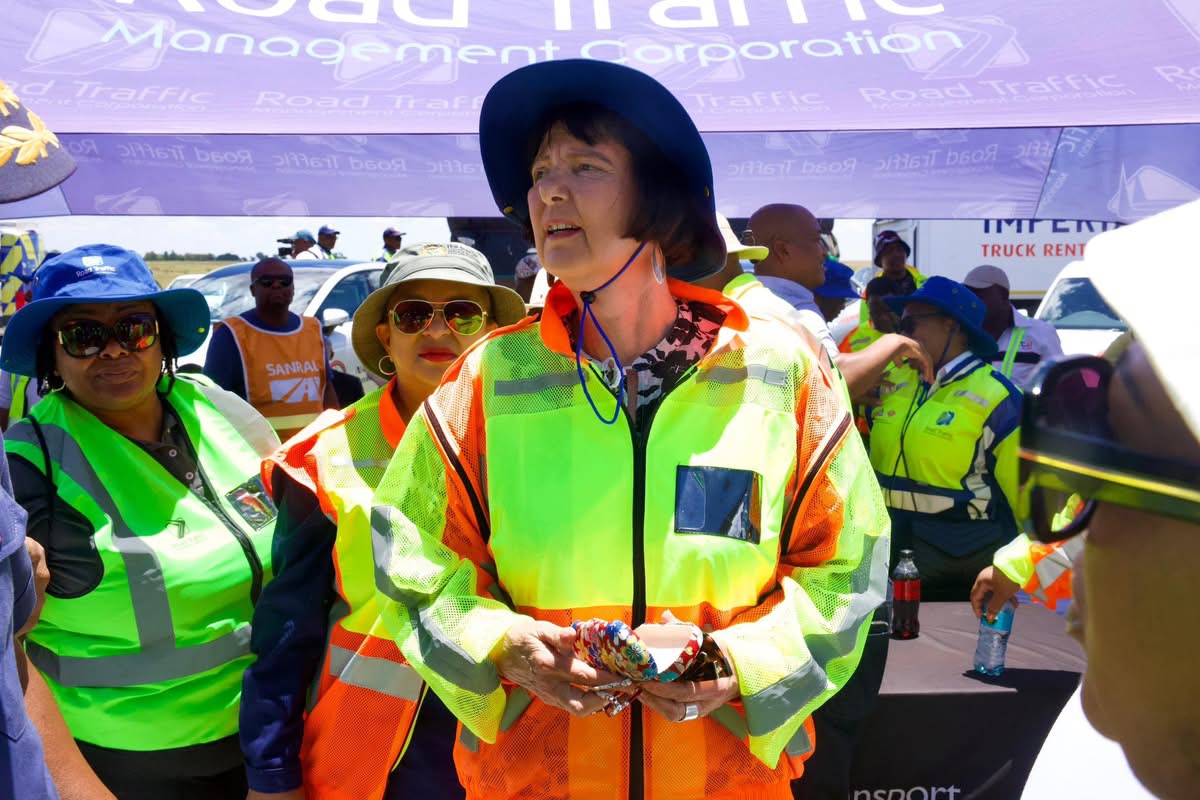
Transport Minister Barbara Creecy: Photo Supplied
By Chris Van Wyk: Transport Minister Barbara Creecy unveiled the 2025/26 festive season road safety campaign on Saturday, announcing that South Africa has reduced its road death toll by 700 this year, but that more than 9,400 fatalities have still been recorded over the period. The remarks came at the campaign launch in Kroonstad, as the country braces for the peak travel period ahead of the holidays.
A sobering milestone amid cautious progress
Minister Creecy stressed that while a five-year downward trend in road crash fatalities has begun to bend, the overall numbers remain unacceptably high. “We have achieved a reduction, but nine out of ten crashes are still attributed to human error,” she said, underscoring the imperative of individual responsibility as captured in the campaign’s theme: “It Starts with Me.”
The minister noted that the five provinces of Gauteng, KwaZulu-Natal, Western Cape, Eastern Cape and Limpopo collectively account for roughly seven in ten road crashes, with the majority of fatal incidents occurring on weekends and after dark.
A province in mourning, seeking broader safety gains
The launch took place against the backdrop of a province grappling with tragedy. Premier Makoena Letsoho-Mathai opened the event by acknowledging the difficult weeks endured in the Free State, including the bus accident that claimed eight early childhood development teachers. Burials were held in Thaba’nchu and Virginia, and Premier Letsoho-Mathai highlighted that survivors are facing life-changing injuries, with many requiring leg amputations.
In a direct appeal to the national authorities, the Premier urged strengthened law-enforcement support: “We need traffic officers, especially in this province. I hope after this, we’ll have some engagement just to find a way of how you are going to assist us, RTMC, this festive season.”
Campaign mechanics: enforcement, routes, and practical safety
Creecy outlined a campaign built on intensified enforcement and practical safety protocols. Key elements include:
24-hour patrols during high-risk periods and on weekends.
Deployment of 800 National Traffic Police officers to bolster Gauteng, Limpopo, KwaZulu-Natal and the Eastern Cape.
Priority attention given to critical routes, including the N1 (Zimbabwe to Cape Town), N2, N3, N4, N17, along with secondary corridors such as the Moloto Road and the R61 in the Eastern Cape.
Roadworthiness and load-management checks at major weighbridges (N3 Heidelberg, N4 Donkerhoek, N1 Manselle).
Santaco (South African National Taxi Association) Secretary-General Daki Qumbu reaffirmed the sector’s commitment to fatigue management. He noted that operators should provide relief drivers for long-distance trips and encouraged drivers to rest after roughly every 200 kilometres.
Safety rules: a focus on human behavior
The campaign centers on concrete behavioral changes to curb human error. Among the measures highlighted:
Speeding remains a critical hazard, particularly in wet conditions and at night; overtaking in oncoming traffic or on blind rises is described as a “death sentence” for drivers, passengers, and others on the road.
For long journeys, drivers are urged to rest every two hours.
Alcohol use remains incompatible with safe driving: motorists are urged to enjoy alcohol at home or in taverns only, not behind the wheel or during road travel.
Child safety is a major focus: Creecy urged mandatory use of car seats for babies and children and insisted that every occupant should buckle up in cars, buses, and taxis.
“Please, please, please put babies and children in car seats. And everyone should use their seatbelts,” Creecy emphasized, arguing that belt use can prevent fatal injuries when emergency braking is necessary.
Pedestrians at risk: targeted guidance
A striking statistic highlighted during the briefing is that pedestrians account for more than half of all road deaths. In response, Creecy issued specific safety instructions for vulnerable road users: walk in well-lit zones, wear highly visible clothing, and favor light colors such as white to improve visibility at night.
A national, coordinated response
All provinces have submitted road safety programs for the festive season, totaling 537 planned education and awareness activities. These initiatives will target a wide range of venues and touchpoints, including train stations, taxi ranks, malls, churches, toll gates, and border posts.
Creecy concluded by paying tribute to the law enforcement officers who will be deployed across the country during the festive period. “When you are relaxing and enjoying the season, spare a thought for these men and women who will be deployed far from home, keeping you safe on the roads,” she said.
The minister’s call to collective action echoes the Easter period’s achievements, when concerted efforts yielded the lowest number of crashes and fatalities in three years. She urged continued nationwide cooperation to further reduce festive-season crashes and fatalities.
As South Africans prepare for the holiday travel rush, officials hope the combined emphasis on driver responsibility, enhanced policing, strategic route management, and improved pedestrian safety will translate into fewer tragedies on the road.